
Do You Need a Fence Permit on the Treasure Coast?
You have picked the fence style, decided where you want the gates, and you are ready to transform your property. Before the first post goes into the ground, however, there is an important question to answer:
Do you need a permit for your new fence?
For homeowners and businesses throughout Vero Beach, Port St. Lucie, Stuart, Okeechobee, and surrounding Treasure Coast communities, the answer depends on where the property is located, the type of fence being installed, the property’s zoning, and the specific scope of work. Fence permitting is especially important in Florida because a mailing address does not always tell you which government has jurisdiction over the property. Someone with a Vero Beach mailing address, for example, may live inside the City of Vero Beach or in unincorporated Indian River County. The City itself notes that only a small portion of properties with Vero Beach mailing addresses are actually within city limits. [1]
Understanding the permit process before construction begins can help prevent delays, unexpected changes, code violations, and problems when selling your property later
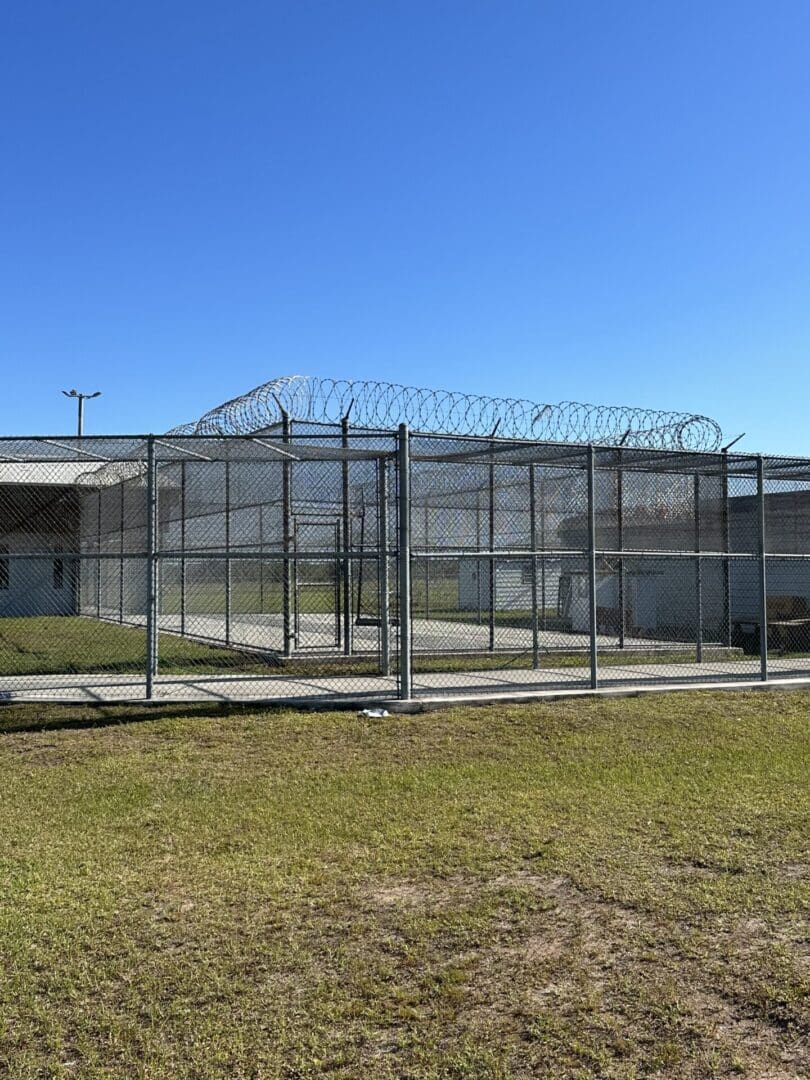
Why Do Fence Permits Matter?
A fence may look simple, but its location can affect property lines, easements, visibility, drainage, pool safety, neighboring properties, and access to utilities.
Local governments may review a proposed fence to determine whether it complies with requirements involving height, placement, materials, gates, sight visibility, pool barriers, and other zoning or building standards.
A professionally planned fence should therefore begin with more than choosing between PVC/vinyl, aluminum, and chain-link fencing. The legal placement of the fence is just as important as the material.
Do You Need a Fence Permit in Port St. Lucie?
Port St. Lucie homeowners should not assume they can simply install a fence anywhere along the edge of their yard.
As of September 2026, the City of Port St. Lucie Building Department specifically lists a Fence Permit (Zoning) among its permit applications. The City also maintains a separate Pool Barrier Permit, which is particularly important for homeowners installing fencing around swimming pools. [2]
That means fence planning in Port St. Lucie should include determining the proper property lines, gate locations, setbacks, easements, and applicable zoning requirements before installation.
This can be especially important in communities such as Tradition, St. Lucie West, Torino, Riverland, Sandpiper Bay, Becker Road, Gatlin Pines, and surrounding Port St. Lucie neighborhoods, where homeowners may also have HOA or architectural review requirements.
A city permit and HOA approval are not the same thing. Receiving approval from one does not necessarily eliminate the need to satisfy the other.
Fence Permits in Vero Beach and Indian River County
Fence permitting around Vero Beach can be confusing because jurisdiction depends on the actual location of the property.
The Indian River County/City of Vero Beach Building Division currently publishes a specific Fence Permit Checklist. That checklist calls for a permit application, documentation verifying the job value, and two copies of a survey or site plan showing the proposed fence and gates. The plans are expected to identify information such as fence type, height, section lengths, gate locations, and gate sizes. Residential and commercial fence permits also require approval from the planning department with jurisdiction over the property. [3]
That survey requirement highlights one of the most important parts of any fencing project: knowing exactly where the fence belongs.
A row of shrubs, an old fence, a driveway edge, or the area that has historically been mowed by one homeowner does not necessarily represent the legal property line.
For homeowners in Vero Beach, Indian River Shores, south county communities, and surrounding Indian River County neighborhoods, confirming jurisdiction and property boundaries early can make the permit and installation process much smoother.
Do You Need a Fence Permit in Stuart?
Properties with Stuart addresses can fall under either the City of Stuart or Martin County, depending on the exact location.
For properties inside the City of Stuart, the City Building Division says it receives permit applications for structures ranging from homes and office buildings to fences and reviews construction plans for compliance with the Florida Building Code and other applicable ordinances. Stuart also provides online building permit applications through its OpenGov system. [4]
For properties within unincorporated Martin County, the County is even more explicit: a permit is required to construct a fence. [5]
This distinction is important for homeowners in and around Stuart, Palm City, Jensen Beach, Hobe Sound, Hutchinson Island, and Sewall’s Point. Your mailing address may not necessarily identify the permitting authority.
Before beginning a fence project, determine whether the parcel falls within municipal boundaries or unincorporated Martin County.
Fence Permits in Okeechobee
Okeechobee properties also require careful attention to whether the property is inside the City of Okeechobee or in unincorporated Okeechobee County.
Okeechobee County’s Code Enforcement FAQ states that permits are needed for the overwhelming majority of projects and specifically includes fences among examples of work requiring permits. [6]
Inside the City of Okeechobee, the Building Department processes permit applications, conducts plan reviews, issues permits, and performs inspections for compliance with applicable building codes and local ordinances. The City notes that permit applications currently may be submitted in person, by fax, or by mail rather than through an online application system. [7]
For Okeechobee homeowners, businesses, and larger properties, fence planning should account for property boundaries, access points, gates, drainage, road visibility, and any other conditions affecting the site.
Did Florida Change Building Permit Rules in 2026?
Yes, and this is one reason property owners should verify current requirements instead of relying on information from several years ago.
Florida Statute 553.79 now requires local governments that issue building permits to provide a permit exemption for certain work valued at less than $7,500 on single-family residential properties.
However, there are important exceptions. The exemption does not apply to qualifying work on properties partially or entirely in a defined flood hazard area, or to electrical, plumbing, structural, mechanical, or gas work. The property owner or contractor must also submit a written exemption request and documentation describing the work and its value. [8]
IMPORTANT: This does not mean every fence costing less than $7,500 can automatically be installed without approval.
A project may still be subject to zoning, setback, easement, HOA, pool-barrier, drainage, or other local requirements. Whether a particular fence project qualifies for an exemption should be confirmed with the government agency that has jurisdiction over the property before construction begins.
Why a Property Survey Matters Before Fence Installation
One of the most common mistakes homeowners can make is assuming they know exactly where the property line is.
The existing fence might not be on the legal boundary. Landscaping may have expanded over time. Neighboring improvements may have been installed years earlier without a current survey.
A survey or appropriate site plan can help identify the property boundaries and other conditions affecting placement. Indian River County and the City of Vero Beach currently require a survey or site plan indicating the proposed fence and gate locations as part of their fence permit checklist. [3]
Planning from accurate information is much easier than moving a completed fence because it was installed in the wrong location.
What About Utility Easements?
An easement can give a utility company or other authorized party rights to access a portion of private property.
A homeowner may technically own the land inside an easement, but that does not necessarily mean a permanent improvement can be placed there without restrictions.
This becomes particularly important when planning privacy fencing, large gates, or fence sections along the back or side of a lot.
Before installation, the property survey and applicable local regulations should be reviewed for easements that may affect the proposed layout.
HOA Approval Is Different From a Fence Permit
Many Treasure Coast communities have homeowners associations with their own architectural standards.
An HOA may regulate matters such as fence material, height, style, color, gate design, location, or whether fencing is allowed in certain areas.
Local government approval does not automatically mean the fence complies with HOA rules, and HOA approval does not automatically mean the project satisfies city or county regulations.
If your home is located in a managed community, it is a good idea to determine the HOA requirements early in the planning process.
That may help you avoid choosing a material or layout that will have to be redesigned before installation.
Are Pool Fences Different?
Yes.
A fence that serves as a swimming-pool barrier carries additional safety considerations.
For example, the current Indian River County/City of Vero Beach fence permit application specifically asks applicants to identify when a proposed fence will serve as a pool barrier and states that the fence must comply with the current Florida Building Code pool-barrier requirements unless another approved barrier is provided. [3]
Port St. Lucie also maintains a specific Pool Barrier Permit in addition to its Fence Permit application. [2]
If you are adding a fence around an existing or new pool, tell your fence contractor from the beginning that the project involves a swimming pool.
Pool fencing should be planned around the applicable safety and access requirements rather than treated as an ordinary decorative fence.
Do Different Fence Materials Require Different Planning?
The permit process may apply regardless of whether you are considering PVC/vinyl, aluminum, or chain-link fencing, but the intended use can affect the design.
A six-foot vinyl privacy fence creates a different visual and wind profile than an open aluminum fence. A chain-link fence surrounding a large commercial property may involve different gate and access requirements than residential backyard fencing.
Commercial projects may also require additional review. Indian River County and the City of Vero Beach, for example, state that commercial fence permits also require Fire Prevention Bureau review. [3]
Choosing your fence material early makes it easier to prepare an accurate permit plan.
Common Fence Permit Questions
Plan Your Fence Correctly From the Start
A fence is a significant property improvement. The best projects begin with a clear plan that considers not only how the fence will look, but also where it can legally be installed, how gates will function, whether permits are required, and what local regulations apply.
Adron Fence has been serving Florida property owners since 1962 and provides PVC/vinyl fencing, aluminum fencing, chain-link fencing, pool fencing, commercial fencing, custom gates, repairs, and replacement fencing throughout the Treasure Coast and Okeechobee.
Whether you are planning more backyard privacy in Port St. Lucie, aluminum fencing around a Vero Beach pool, commercial fencing in Stuart, or a new fence and gate system in Okeechobee, our team can help you plan the project from the beginning.
READY TO START YOUR FENCE PROJECT?
Contact Adron Fence today to request a professional fence estimate and discuss the permit requirements for your property.
Serving Vero Beach • Port St. Lucie • Stuart • Okeechobee • Surrounding Treasure Coast Communities
ADRON FENCE - FENCING YOU IN SINCE 1962
Sources
[1] City of Vero Beach - Submit a Service Request
https://www.covb.org/577/Submit-a-Service-Request
[2] City of Port St. Lucie - Building Forms & Documents
https://www.cityofpsl.com/Government/Your-City-Government/Departments/Building/Building-Forms-Documents
[3] Indian River County/City of Vero Beach Building Division - Fence Scope of Work Permit Application
https://indianriver.gov/Document%20Center/Services/Building%20and%20Facilities%20Services/Building%20Division/Permits%20And%20Forms/Permit%20Applications%20and%20Checklists/Fence-Scope-of-Work-Permit-Application.pdf?t=202509241620140
[4] City of Stuart - Development, Building, Planning, Zoning, Business Tax & GIS
https://www.stuartfl.gov/255/Development-Building-Planning-Zoning-Bus
[5] Martin County Florida - Fence Requirements
https://www.martin.fl.us/martin-county-services/fence-requirements
[6] Okeechobee County - Code Enforcement Frequently Asked Questions
https://www.okeechobeecountyfl.gov/departments/community-development/codeenforcement/frequently-asked-questions
[7] City of Okeechobee - Building & Permitting
https://www.cityofokeechobee.com/building-permitting.html
[8] Florida Senate - 2026 Florida Statutes, Section 553.79
https://www.flsenate.gov/Laws/Statutes/2026/553.79
[9] City of Port St. Lucie - Building Permits: Applications, Fees and Checklists
https://www.cityofpsl.com/Government/Your-City-Government/Departments/Building/Building-Permits-Applications-Fees-and-Checklists